
Where We Be
 | |  | |  | |  | |  | |  | |  |
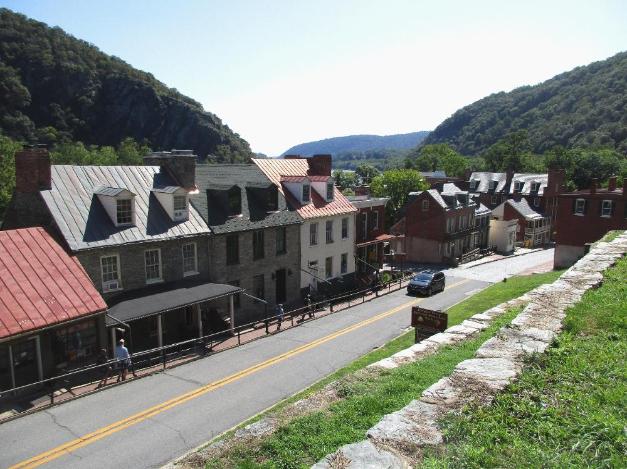
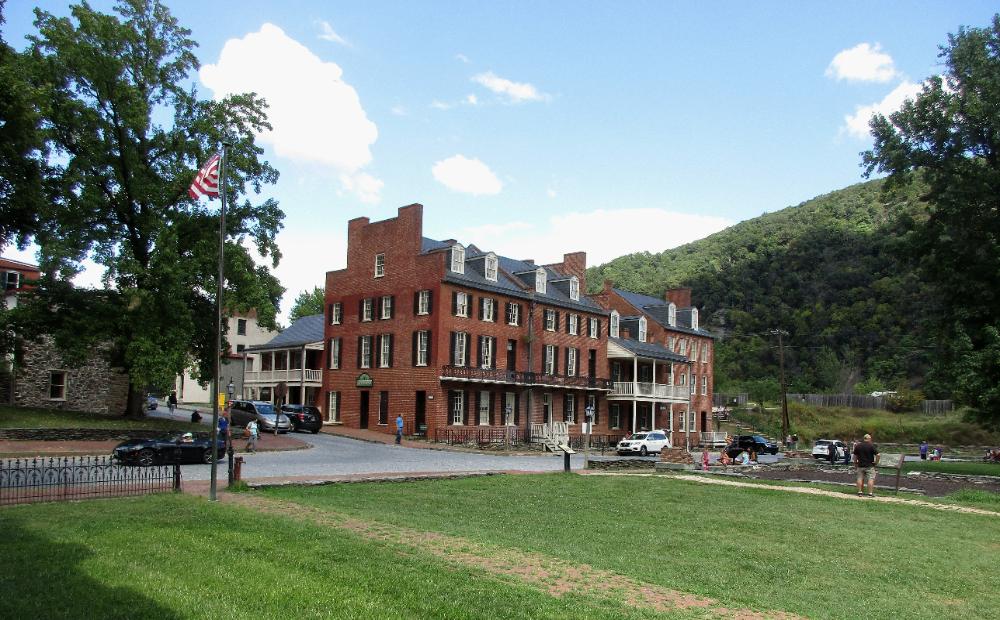
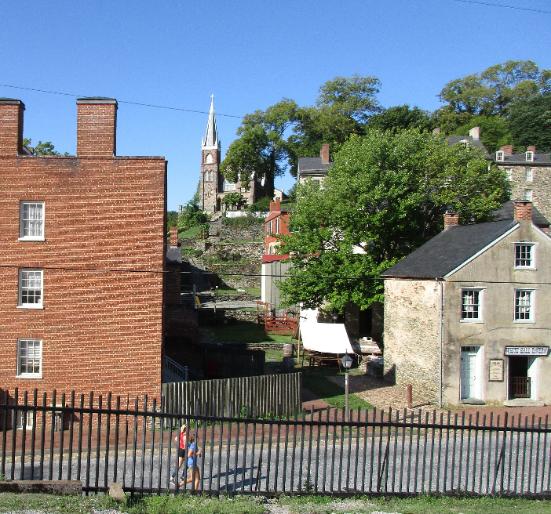
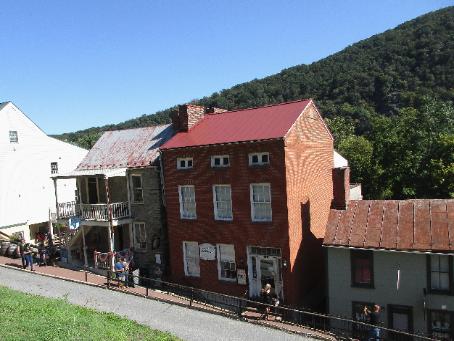
| Harpers Ferry gets big points for quaintness. Most of the buildings are historic and furnished as they would have been in the 1860s. |
| Harper's Ferry, West Virginia |
The next noteworthy stop along our route was
Harpers Ferry in West Virginia. We stayed put
for two nights and thoroughly enjoyed this small
town full of Civil War history. It's set at the
confluence of the Potomac and Shenandoah
Rivers -- and sits at the meeting point of three
states: WV, MD, and VA. This really is a quaint
historic town with lots of buildings open to
visitors – dry goods stores, tailor shops,
watchmaker shops, confectionaries, historic
residences, boarding houses, taverns, etc.
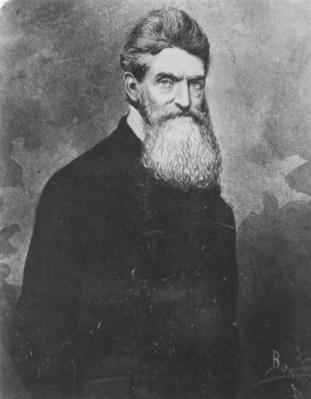
Harpers Ferry is also the site of John Brown's
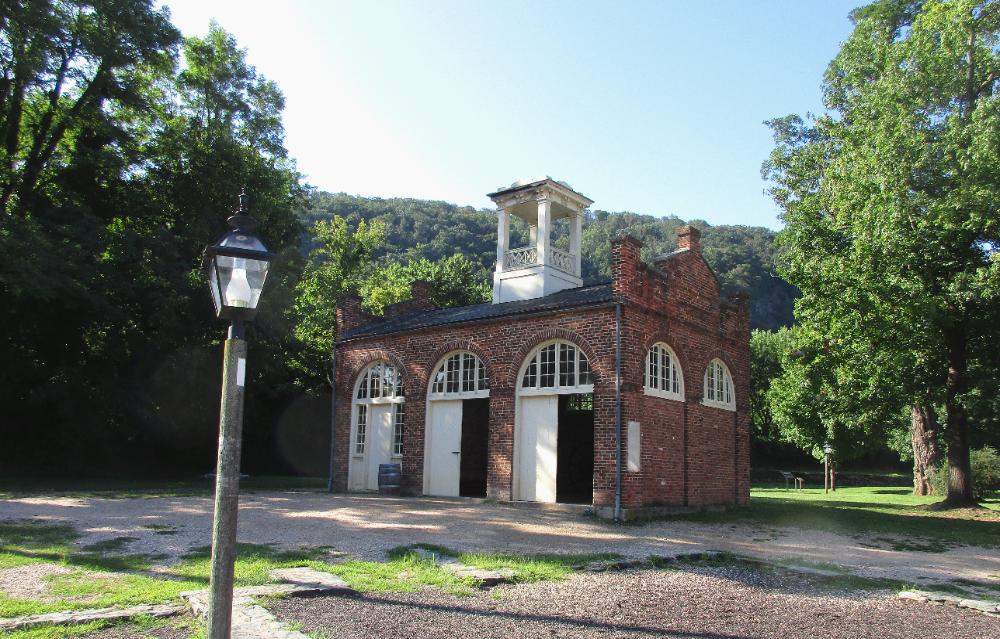
Raid. Here you can see John Brown’s Fort. A
monument shows where the "fort" stood at the
time, but the building itself has been moved
several times over the years -- including once
as an exhibit at the Chicago Fair! This is where
the white abolitionist John Brown and his
followers made their final stand against
surrounding troops. His hope was to raid the
ammunition depots and arm southern slaves,
but it didn’t quite turn out that way. He was
hanged for his rebellion, but his death in many
ways lit the spark for the Civil War. Museums in
town shed further light on his role here. There's
a Civil War Museum, an 1862 Battle of Harpers
Ferry Musem, Black History Museum, and more.
Harpers Ferry in West Virginia. We stayed put
for two nights and thoroughly enjoyed this small
town full of Civil War history. It's set at the
confluence of the Potomac and Shenandoah
Rivers -- and sits at the meeting point of three
states: WV, MD, and VA. This really is a quaint
historic town with lots of buildings open to
visitors – dry goods stores, tailor shops,
watchmaker shops, confectionaries, historic
residences, boarding houses, taverns, etc.
Harpers Ferry is also the site of John Brown's
Raid. Here you can see John Brown’s Fort. A
monument shows where the "fort" stood at the
time, but the building itself has been moved
several times over the years -- including once
as an exhibit at the Chicago Fair! This is where
the white abolitionist John Brown and his
followers made their final stand against
surrounding troops. His hope was to raid the
ammunition depots and arm southern slaves,
but it didn’t quite turn out that way. He was
hanged for his rebellion, but his death in many
ways lit the spark for the Civil War. Museums in
town shed further light on his role here. There's
a Civil War Museum, an 1862 Battle of Harpers
Ferry Musem, Black History Museum, and more.
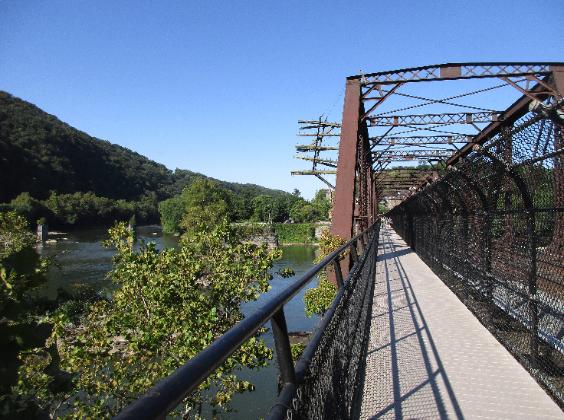
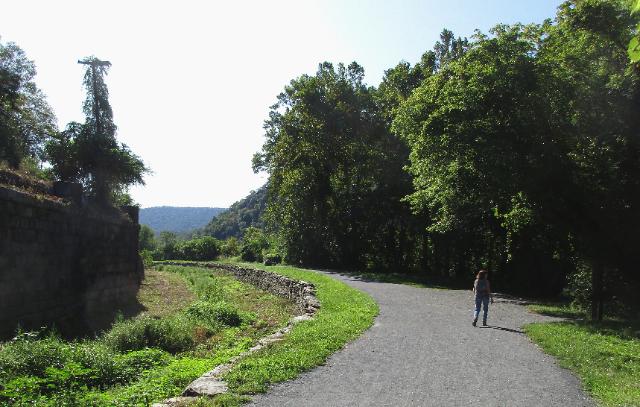
| A short walk across the footbridge brings you from West Virginia into Maryland following right along the Appalachian Trail |
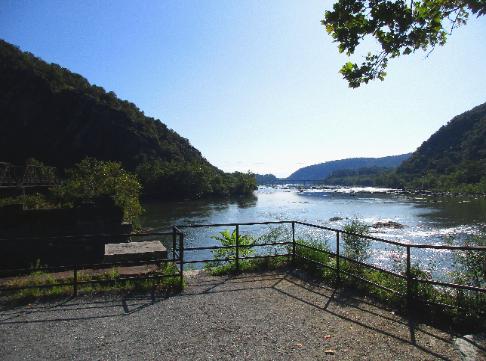
| View from The Point in the late afternoon when the lighting is more favorable |
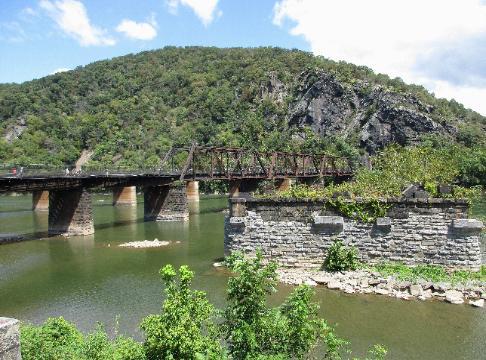
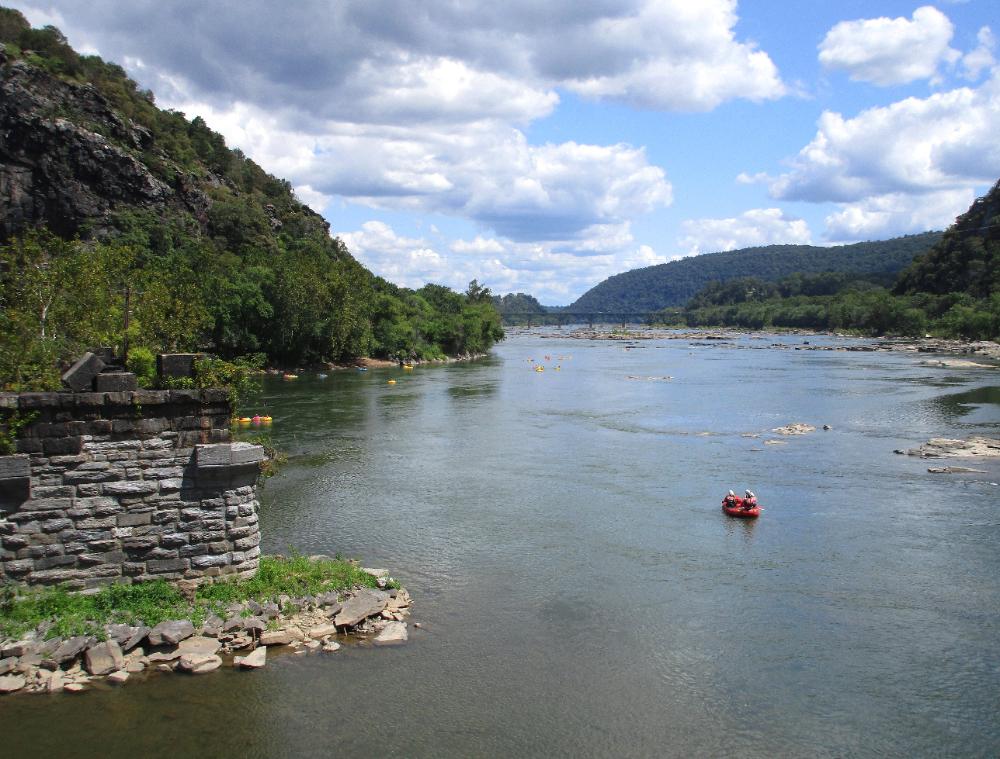
| Harpers Ferry isn't all about historical sites. It's also a lovely town with plenty of hiking trails and scenic points. At left is the overlook known as The Point, at the confluence of the Potomac and Shenandoah Rivers. At right is a footbridge that crosses the Potomac River. |
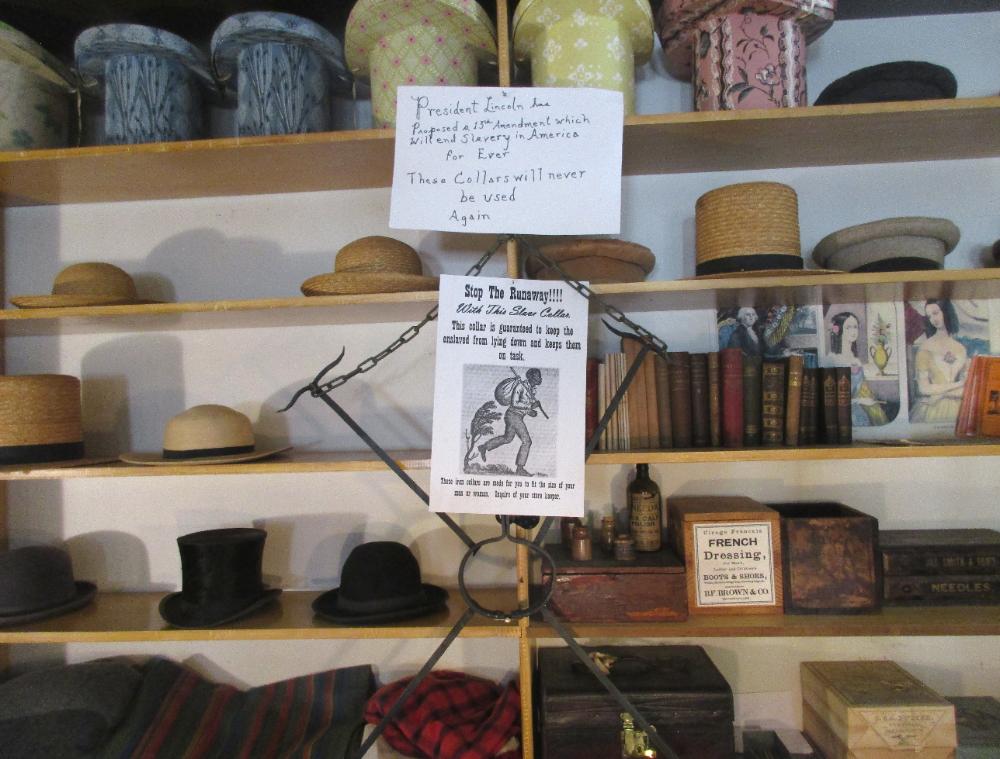
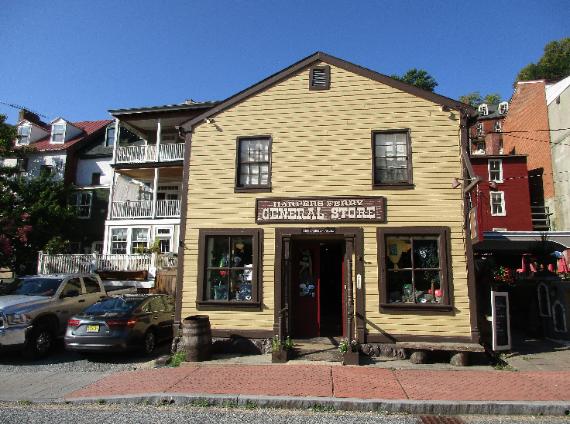
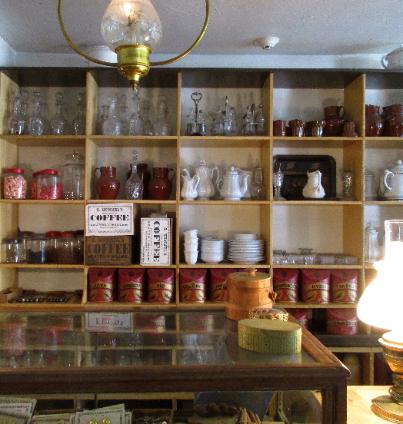
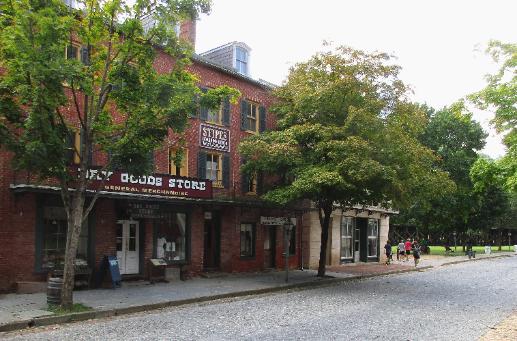
| The General Store is just one of many that you can enter to get an idea of what typical shops would have looked like just before the Civil War |
| Brown's controversial actions were viewed as treasonous by some and heroic by others. Although the raid failed, it helped ignite the flames of the Civil War. Former slave Frederick Douglass proclaimed that Brown's fight here began "the war that ended slavery." |
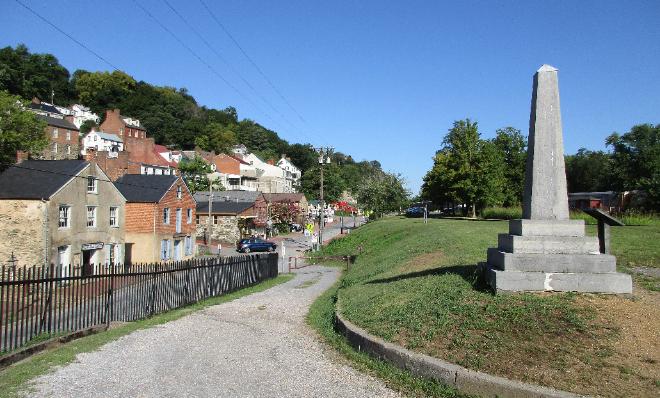
| Brown raided the federal armory which once stood on this grassy plot. (It was later blown up by Union soldiers to keep its weapons from getting into the hands of the Confederates.) Brown's goal was to arm abolitionists and slaves for a violent uprising in the South. |
| This is the actual firehouse, which became known as John Brown's Fort. Its location has changed four times -- including a visit to Chicago for the World's Exposition. |
| The stone marker identifies the original site of the firehouse where the abolitionist John Brown and his men made their last stand in October 1859 |
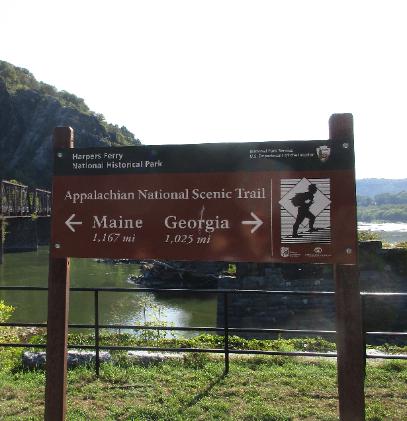
| The Appalachian Trail continues all the way to Maine if you just keep on walking! |
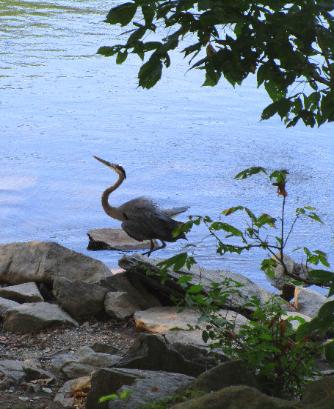
| Blue heron fishing along the river's edge |
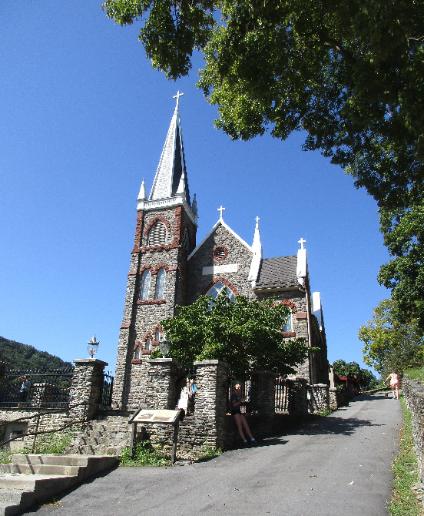
| We also visited St. Peters Roman Catholic Church at the top of a hill |
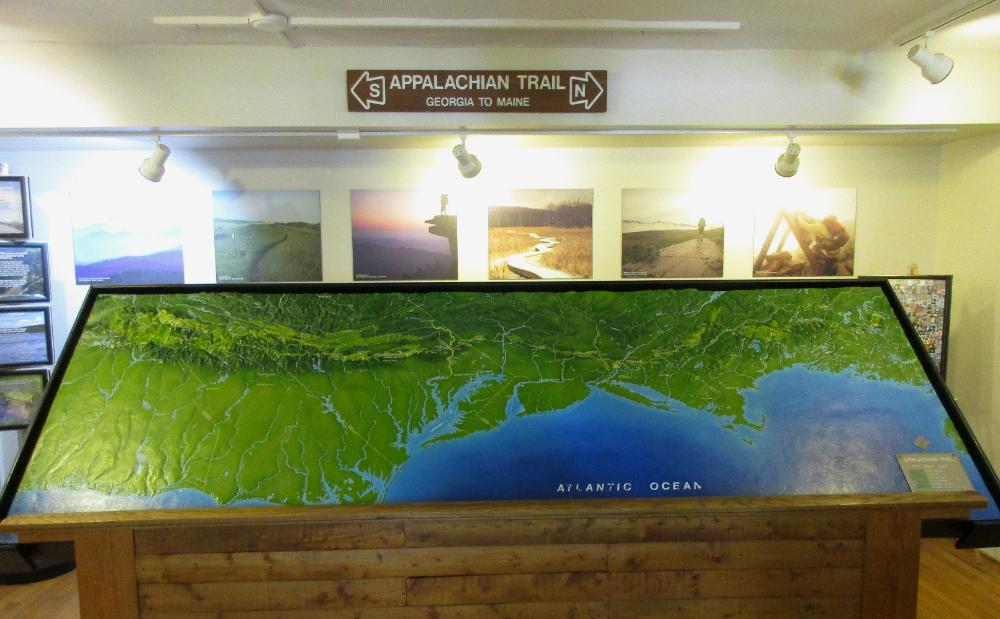
| We finished up with a stop at the Appalachian Trail Headquarters. Harpers Ferry represents roughly the midpoint of the hike from Georgia to Maine. |
| You can easily fill a day or a weekend here. There's a Civil War Museum, a Battle of Harpers Ferry Musem, and a Black History Museum describing how many former slaves were returned to slavery when the Union forces lost Harpers Ferry. You can also pop into historic dry goods stores, tailor shops, watchmaker shops, confectionaries, residences, boarding houses, taverns, etc. |
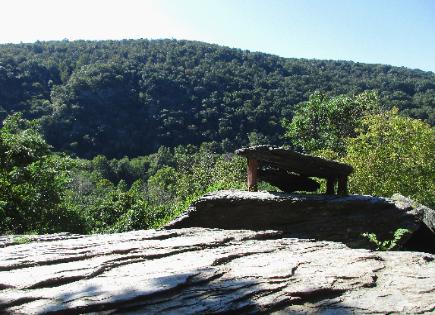
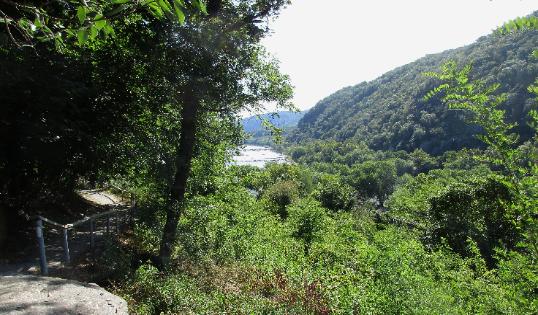
| Further up the hill you reach Jefferson's Rock, named for Thomas J. who wrote: "This scene is worth a voyage across the Atlantic." But unfortunately the view these days is mostly compromised by the trees. |
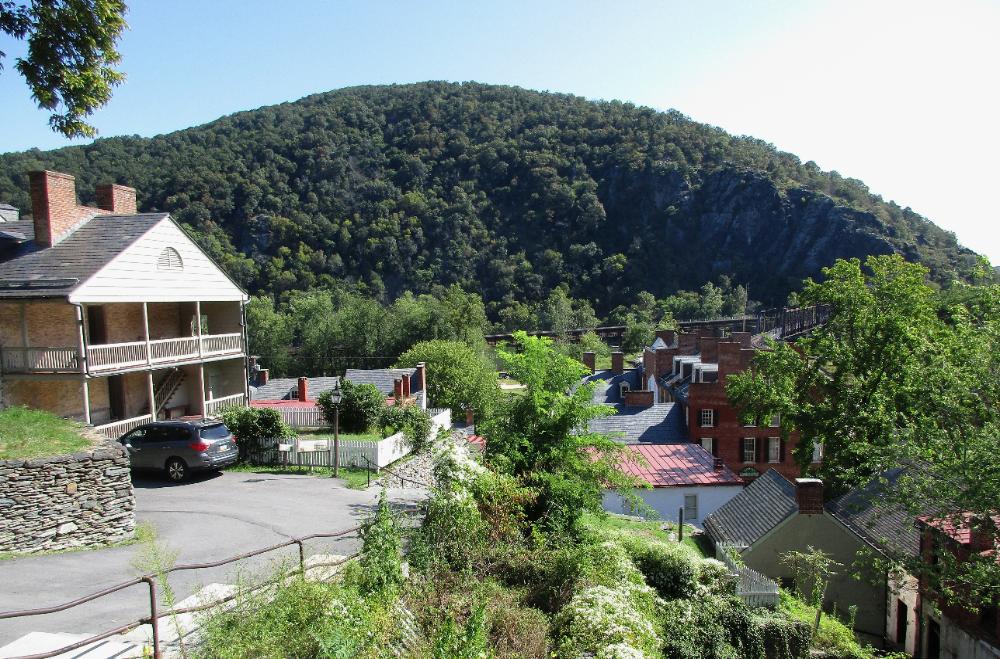
| From the church you get decent views of the town. The hill straight ahead is Maryland Heights, which hosted the first battle between Union and Confederate troops in Maryland. The Confederates took this strategic hill then seized the town, resulting in the capture of 12,419 Union soldiers -- the largest surrender of Federal forces during the Civil War. |

| We really enjoyed our time in Harpers Ferry. This cute fawn bid us farewell as we headed on our way. |